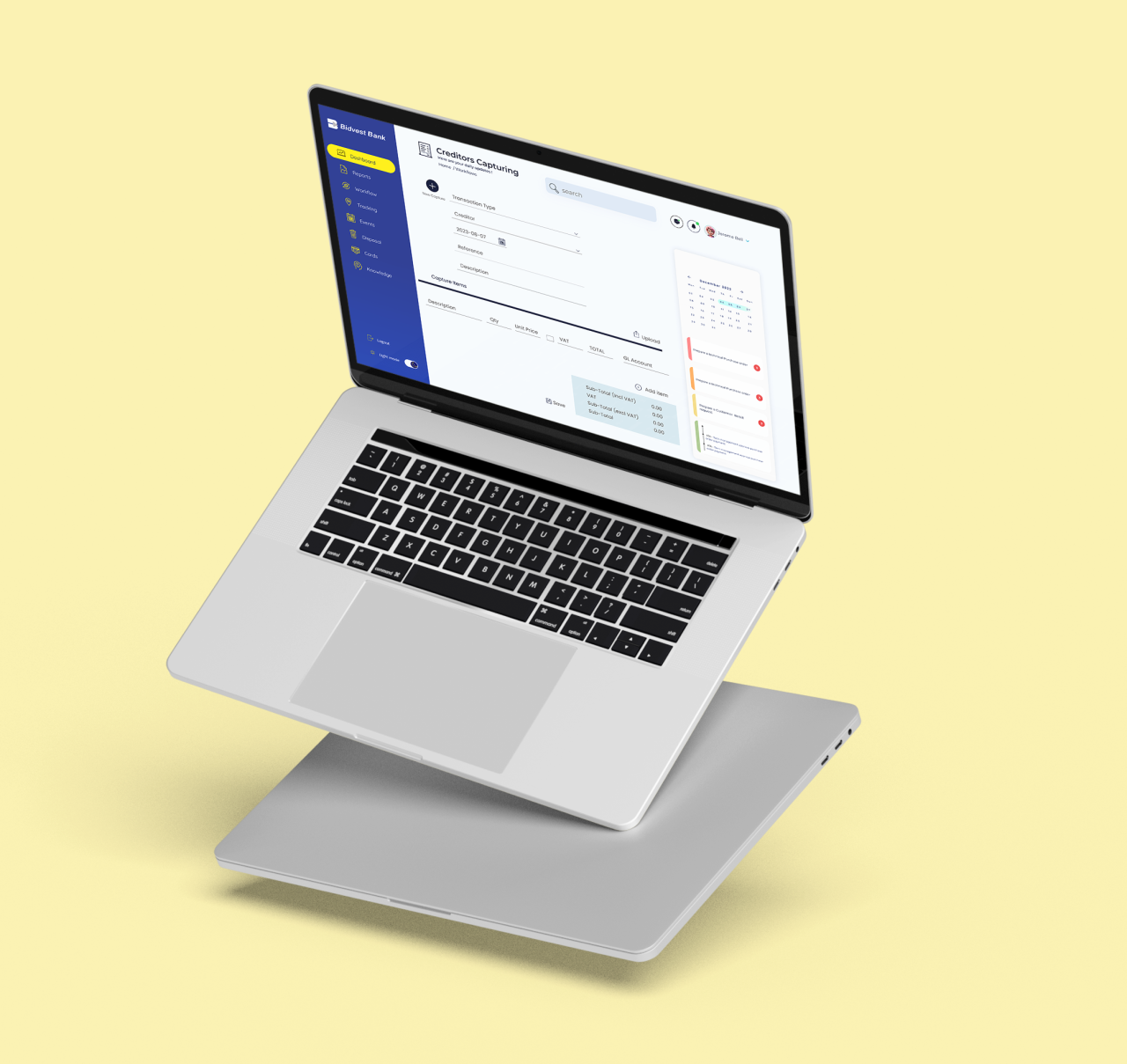
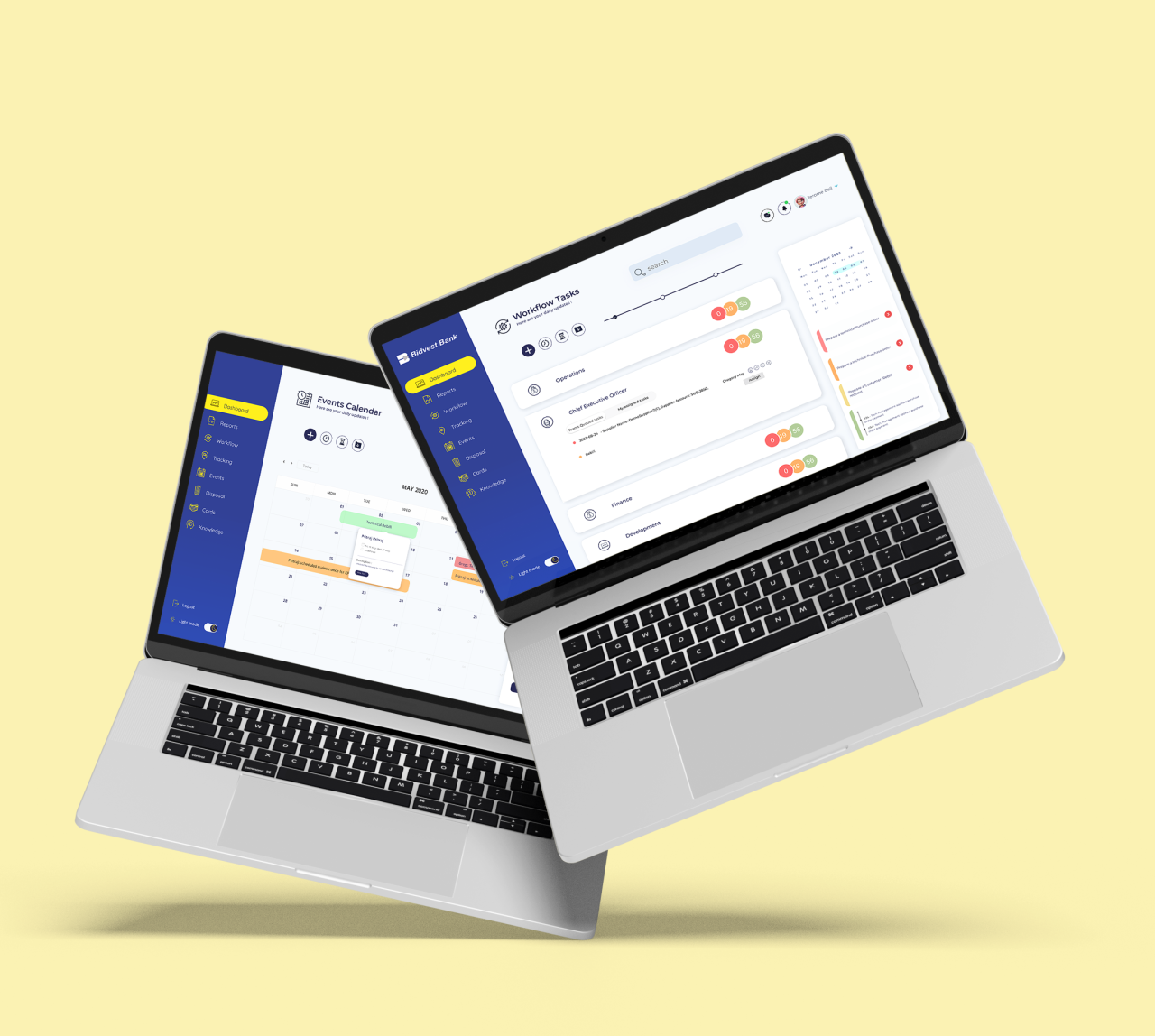
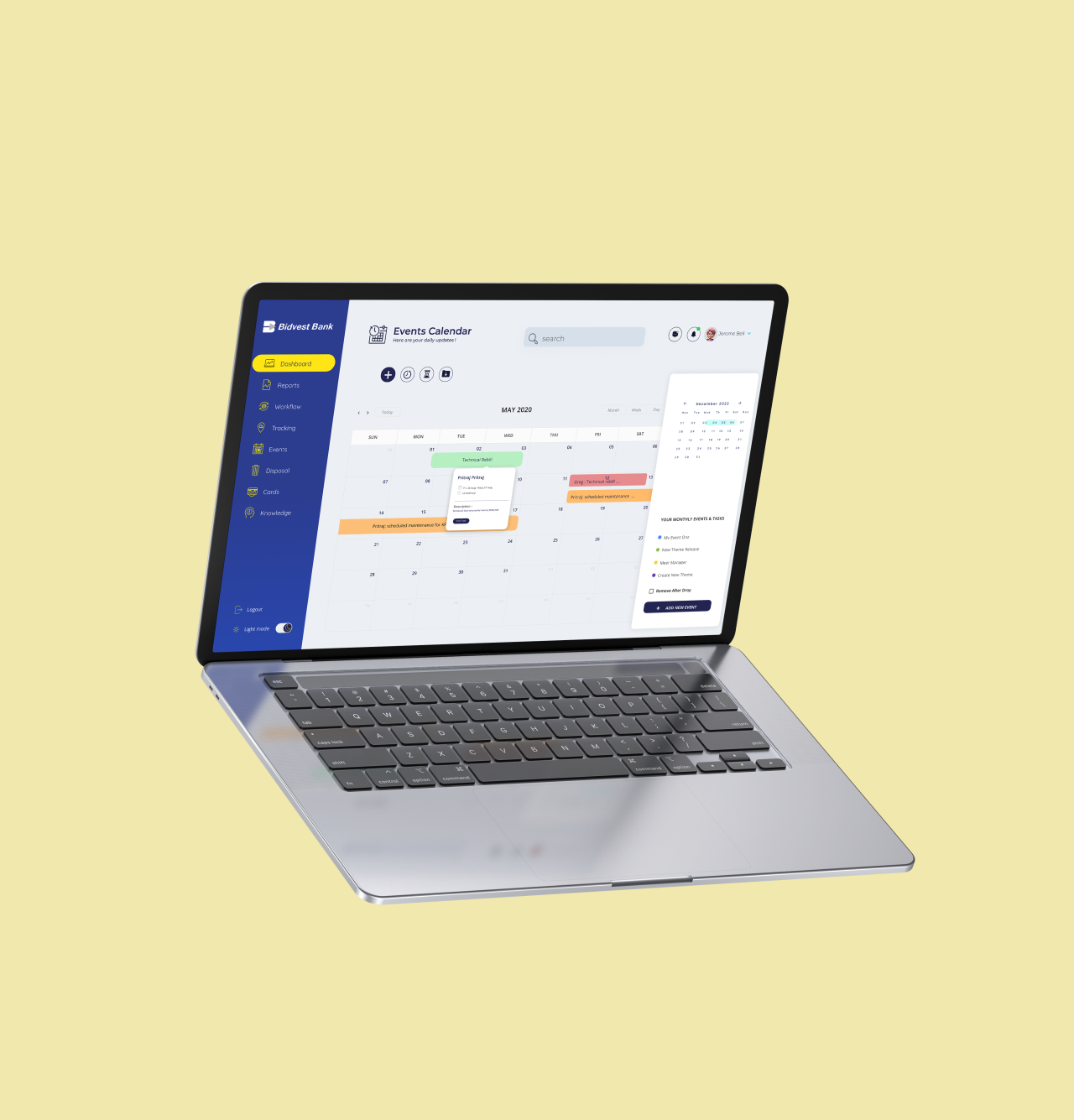
Bidvest Bank Fleet Management Mobile App – UX/UI Design
1. Project Overview:
The Bidvest Bank Fleet Management Mobile App was part of a broader digital transformation initiative. The main goal was to modernize the existing legacy systems and create a user-friendly, efficient mobile application that would enhance usability and ultimately improve customer satisfaction by 40%.
2. Research Methodology:
We started with a mixed-methods approach. Initially, we conducted **quantitative research** through surveys distributed to current users of the fleet management system to identify the key pain points of the existing platform. The survey results highlighted areas such as slow performance, a lack of intuitive navigation, and difficulty accessing critical fleet data.
Following this, we used **qualitative research**, which included in-depth interviews with key stakeholders—fleet managers, drivers, and customer support staff. These interviews allowed us to gather insights into how different user groups interacted with the system, what their most critical needs were, and the specific frustrations they faced with the legacy system.
3. User Personas
From the research findings, we created detailed user personas, each with their specific needs and goals:
Fleet Manager: Needs quick access to fleet data, vehicle reports, and fuel consumption to make informed decisions. Their key pain point was the difficulty of retrieving reports quickly on the legacy system.
Driver: Primarily focused on an intuitive interface that provided easy access to vehicle status and route optimization. Their frustration came from a complex user interface that wasn’t optimized for mobile use.
Customer Support Team: Needed to resolve issues quickly, often requiring access to vehicle histories and user data. Their challenge was the slow performance of the system when retrieving these details.
These personas were critical in ensuring that the mobile app design met the diverse needs of all user types.
4. Findings:
Our research uncovered several key insights:
Outdated User Interface: The legacy system’s UI was cluttered and not optimized for mobile, which significantly slowed down workflows.
Inconsistent User Experience: Users found the platform unintuitive, particularly fleet managers who needed to perform tasks quickly.
Data Overload: Users were overwhelmed by the volume of data presented without adequate filtering options.
These findings helped us narrow down the most impactful features and prioritize changes.
5. Transition from Legacy Systems:
The legacy system had been in use for several years and was deeply ingrained in the operations. This created a few challenges:
Data Migration: We needed to ensure a seamless migration of data without disrupting the operations of fleet managers. Our solution was to build a backend integration that allowed both systems to run parallel for a limited time, ensuring no loss of data.
Change Management: Users were accustomed to the old system, so we incorporated a phased rollout strategy and provided user training sessions to ease the transition.
6. Design Process:
Wireframes and Prototyping: Based on our user research and personas, we created low-fidelity wireframes using Figma, focusing on simplifying the user flow. After feedback from stakeholders, we moved into high-fidelity prototypes that incorporated the brand guidelines of Bidvest Bank, emphasising simplicity and clean navigation.
Collaboration with Developers: During the development phase, we maintained close collaboration with the dev team to ensure the design elements were implementable without compromising on the user experience.
Usability Testing: We ran multiple rounds of usability tests, iterating on the design based on user feedback until we achieved a design that both stakeholders and end-users were satisfied with.
7. Final Outcome:
The final product was a highly optimised mobile app that:
– Reduced the time needed for fleet managers to access reports by 30%.
– Improved navigation flow for drivers, significantly reducing errors when accessing route data.
– Achieved a 40% increase in customer satisfaction post-launch due to improved usability and performance.
The success of this project lies in its user-centric design approach and seamless transition from a complex legacy system to a modern, efficient mobile app.